Deer Park: The Hidden Gem of Olympic National Park Most Visitors Miss
Ask anyone where to go in Olympic National Park and you’ll hear the same short list every time: Hurricane Ridge, the Hoh Rainforest, Ruby Beach, Lake Crescent. These places are rightfully famous. They’re also rightfully packed. Hurricane Ridge in particular has become harder to access since a 2023 fire destroyed the historic day lodge and visitor center. Today, the road operates under a strict daily cap of 315 cars. Once that limit is hit, they close the gate.
I’ve spent a lot of time in this park. I’ve hiked most of it and camped through it in every season. Ultimately, I chose to build RV@Olympic just minutes from the main entrance because I genuinely believe this is one of the most extraordinary corners of the American West. In all that time, the place I keep coming back to is a small alpine area on the northeastern edge of the park that almost no one talks about.
It’s called Deer Park. It sits at 5,400 feet. And it’s one of the true hidden gems of Olympic National Park.
Why Deer Park Belongs on Every “Must Sees Olympic National Park” List and is the Hidden Gem of Olympic National Park
Olympic is a park of superlatives. It contains three distinct ecosystems – coast, temperate rainforest, and alpine mountains – all within a single boundary. Most visitors sample two, maybe all three, and leave feeling like they’ve seen it. Deer Park is the reason they haven’t.
Here’s what makes it one of the true hidden gems of Olympic National Park:
It’s in the rainshadow. The west side of the Olympics receives up to 150 inches of rain annually. By contrast, Deer Park sits in a dry pocket that gets only about 16 inches. As a result, you get clearer skies, drier trails, and weather that actually cooperates when the rest of the peninsula is fogged in.
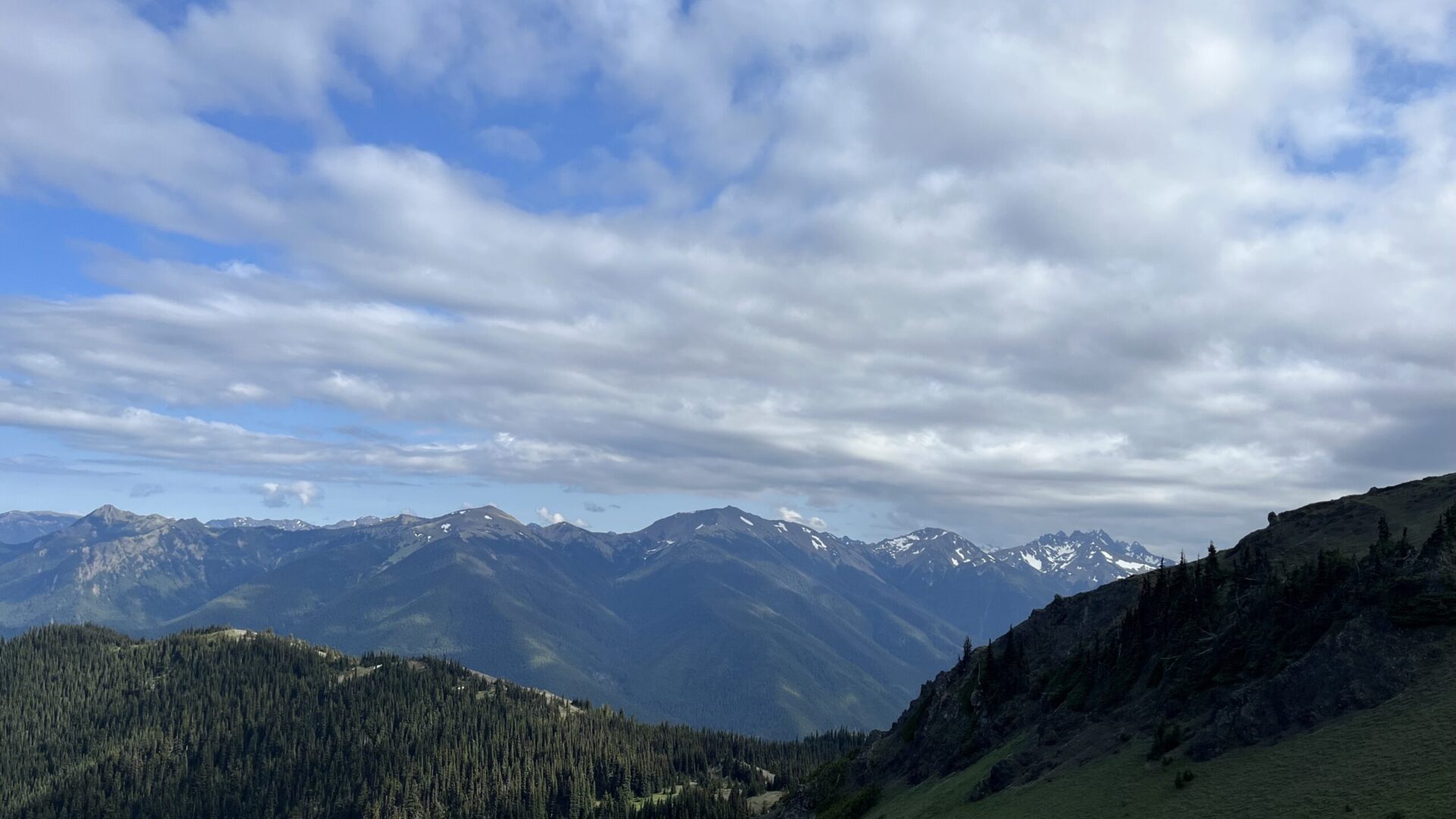
The views rival Hurricane Ridge – without the crowds. Some locals quietly argue the panorama from the top of Blue Mountain is actually better than Hurricane Ridge. You get 360-degree views of the Olympic interior, the Strait of Juan de Fuca, and Vancouver Island on a clear day. Additionally, there’s no vehicle cap that can turn you away at the gate.
It’s an International Dark Sky paradise. With no development for miles and an elevation over a mile high, Deer Park Campground is considered one of the best stargazing spots on the entire Olympic Peninsula. On clear nights, the Milky Way burns overhead in a way that stops you cold.
You’ll see species found nowhere else on Earth. The meadows host Olympic endemic species – plants and animals that evolved in isolation above Ice Age glaciers. Keep an eye out for Olympic marmots, Olympic chipmunks, Piper’s bellflower, and Flett’s violet. Deer, mountain goats, and occasionally elk also wander the ridgelines.
It’s genuinely uncrowded. Even on a summer weekend, you can usually find parking. For anyone burned out on trailhead jockeying at the best places to visit in Olympic National Park, that alone makes Deer Park worth the drive.
The Trade-Off: Why This Off-the-Beaten-Path Destination Stays That Way
Solitude always comes at a price. At Deer Park, that price is 17 miles of road. The last 9 are narrow, steep, winding gravel that climb over 5,000 vertical feet. There are no guardrails and very limited pull-outs for passing.
I want to be honest: this road is not scary if you’re comfortable with mountain driving. However, it is genuinely unpleasant if you’re not. The National Park Service specifically advises against RVs, trailers, or oversized vehicles – and they mean it. Once you leave Highway 101, there are no services. No food, no water, no gas, and essentially no cell signal. Dogs are welcome in the campground and on the road, but not on any trails.
That combination – the gravel climb, no amenities, and a road that closes with the first snowfall and typically doesn’t reopen until late May or June – is exactly why Deer Park stays an off-the-beaten-path secret. It selects for a certain kind of traveler. If that’s you, it rewards you generously.
The Best Hikes at Deer Park
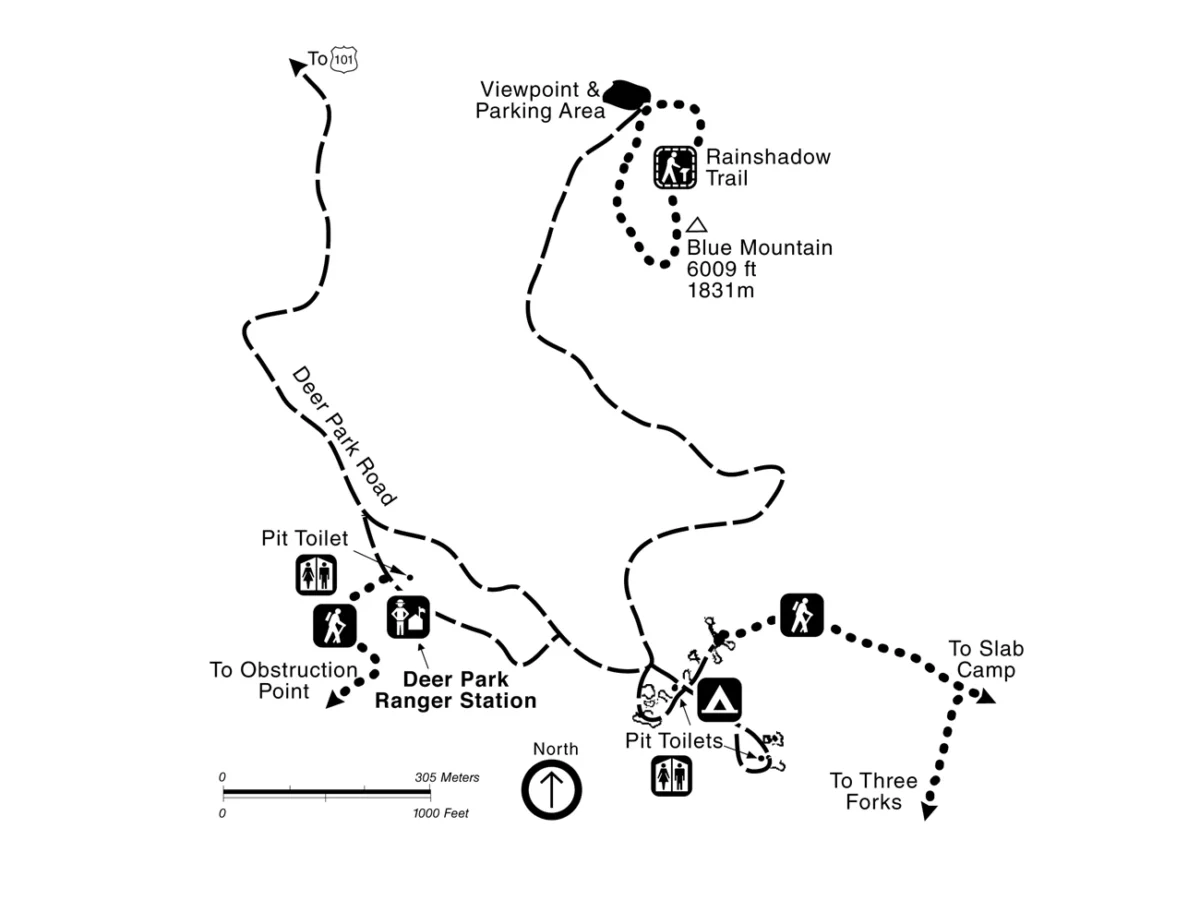
Three very different trails leave from the top of Deer Park Road – which is part of what makes it such a surprisingly rich destination for a relatively small area of the park. Learn more here.
Rain Shadow Loop (0.5 miles, easy)
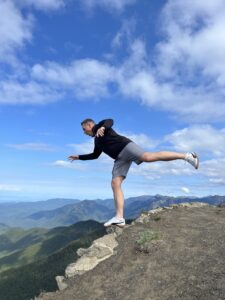
This half-mile interpretive loop climbs gently to the 6,007-foot summit of Blue Mountain. It’s probably the easiest true summit hike in all of Olympic National Park. The reward, however, is absurd: a full 360-degree panorama of the Olympic interior, the Strait, and on good days the Cascades to the east. Time it for sunset. When the marine layer pushes in from the Pacific, the valleys fill with clouds. You’re left looking out over what feels like an ocean of them, with peaks poking through.
Obstruction Point Trail to Maiden Peak (7.2 miles round trip, moderate-to-challenging)
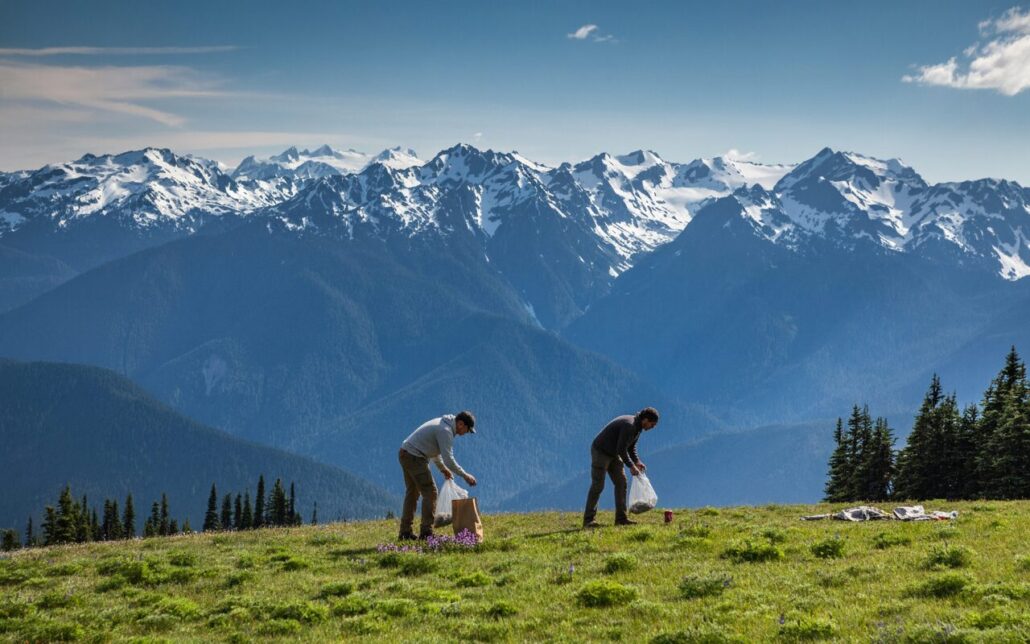
This is the trail locals talk about quietly. The route traces a high ridge above 5,500 feet, with nearly continuous views and wildflower meadows that peak in July and August. There’s also a 2,100-foot elevation gain spread across the distance. Reach Maiden Peak and you’ll understand why this is one of the most underrated day hikes on the Peninsula. For strong hikers, furthermore, the full Obstruction Point-Deer Park traverse – one-way with a car shuttle – is a bucket-list ridge walk.
Three Forks Trail (4.4 miles one-way, steep)
This is a “reverse” hike – you start high and descend more than 3,500 feet into the valley. The scenery along Cameron Creek is beautiful, but the math is simple: whatever you descend, you climb back out. Most day hikers skip it unless they’re shuttling or camping at the bottom.
Deer Park Campground: Sleep Above the Clouds
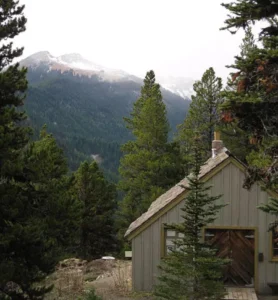
If you want to truly experience this part of the park, spend a night at Deer Park Campground. It’s tent-only, first-come first-served, and offers only basic vault toilets. There is no water, no hookups, and no services at all. You pack in everything you need and pack out everything you don’t.
A note for guests staying with us at RV@Olympic: Deer Park Campground is tent-only and doesn’t accommodate rigs. What it does offer is a spectacular day trip – roughly 45 minutes to an hour from our park up to the summit, with time to hike and be back for a proper dinner. It’s one of the day trips I personally recommend most often.
When to Visit Deer Park
July through early October is the sweet spot. The road is fully open, wildflowers peak in July and August, and fall brings an underrated display of golden bunchgrass and red huckleberry across the meadows.
Late May through June can be hit or miss – the road often opens late, and snow can linger at the summit into early summer.
Fall may be the single best time to go. The crowds have thinned further, the light gets long and golden, and the dry meadows turn shades of amber and rust. I’ve made the drive in October and had the summit completely to myself.
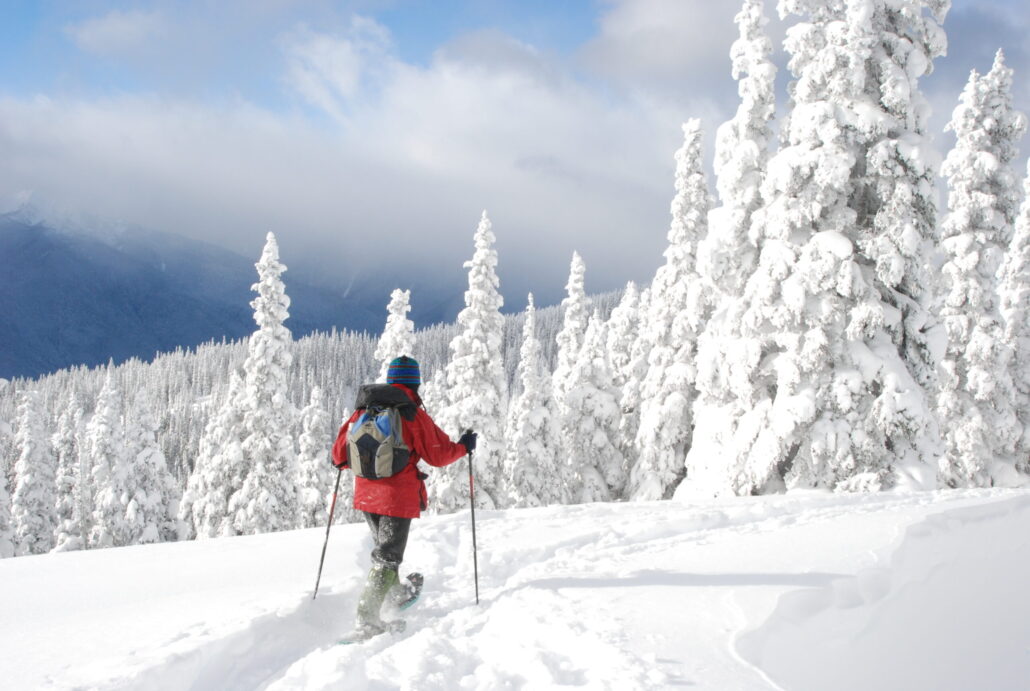
Winter closes the road at the park boundary, roughly 9 miles from Highway 101. Experienced snowshoers and cross-country skiers still make the journey, but it becomes a serious backcountry undertaking.
How to Get to Deer Park
From Highway 101, turn south onto Deer Park Road about 5 miles east of Port Angeles (near the cinema – locals will recognize the turnoff). The first 9 miles are paved and climb gently. The last 9 miles are gravel, narrower, and significantly steeper. Plan on 45 minutes to an hour to drive the full route up, and don’t rush it on the way down.
You’ll need to pay the standard Olympic National Park entrance fee ($30 per vehicle, good for 7 days) or show an America the Beautiful pass. There’s no entrance station on Deer Park Road itself, so purchase your pass at the main park entrance in Port Angeles or online beforehand.
Deer Park vs. Hurricane Ridge: Which Should You Visit?
This is a question I get from guests frequently, and my honest answer has changed since the 2023 fire.
Before the fire, Hurricane Ridge had the paved road, the visitor center, the cafe, and the accessible viewpoints that made it the obvious first choice for most visitors. Post-fire, the calculus is different. Hurricane Ridge now has no indoor facilities, only portable toilets, a strict 315-vehicle daily cap (with just 175 parking spaces), and no confirmed timeline for rebuilding the day lodge.
If it’s your first trip to Olympic National Park and you want paved access, go to Hurricane Ridge – but get there early, or take the Clallam Transit shuttle to avoid being turned away when capacity fills. If you’ve already done Hurricane Ridge, want an Olympic experience that feels the way national parks used to feel, or simply want to guarantee you can actually get in, Deer Park is the answer. It’s genuinely one of the best off-the-beaten-path destinations in Olympic National Park – the kind of place you’ll remember long after the busier spots blur together.
The Bottom Line on the Hidden Gem of Olympic National Park
Next time someone asks you where to go in Olympic National Park, put Deer Park into the conversation. It won’t be on any top-10 list curated by an algorithm. It’s not easy to get to. It has no gift shop, no snack bar, and limited cell service.
What it has instead is everything that made you want to visit a national park in the first place: solitude, wildness, stars you can’t see from the city, and views that feel like they belong entirely to you. In a park as famous as Olympic, that kind of quiet is genuinely rare – and that’s exactly what makes Deer Park one of the best-kept hidden gem of Olympic National Park.
Quick Reference: Planning Your Visit to Deer Park
- Location: Northeastern Olympic National Park, accessed via Deer Park Road off Highway 101
- Drive time from Port Angeles: About 1 hour
- Elevation: 5,400 ft (campground) / 6,007 ft (Blue Mountain summit)
- Road status: Typically open late May/June through October
- Vehicle requirements: Passenger cars fine; NO RVs, trailers, or oversized vehicles
- Fees: Olympic National Park entrance fee ($30/vehicle) or America the Beautiful Pass
- Amenities: Vault toilets only – no water, food, services, or cell signal
- Best time to visit: July through October
- Dog policy: Leashed dogs OK in campground and on road; NOT permitted on trails